
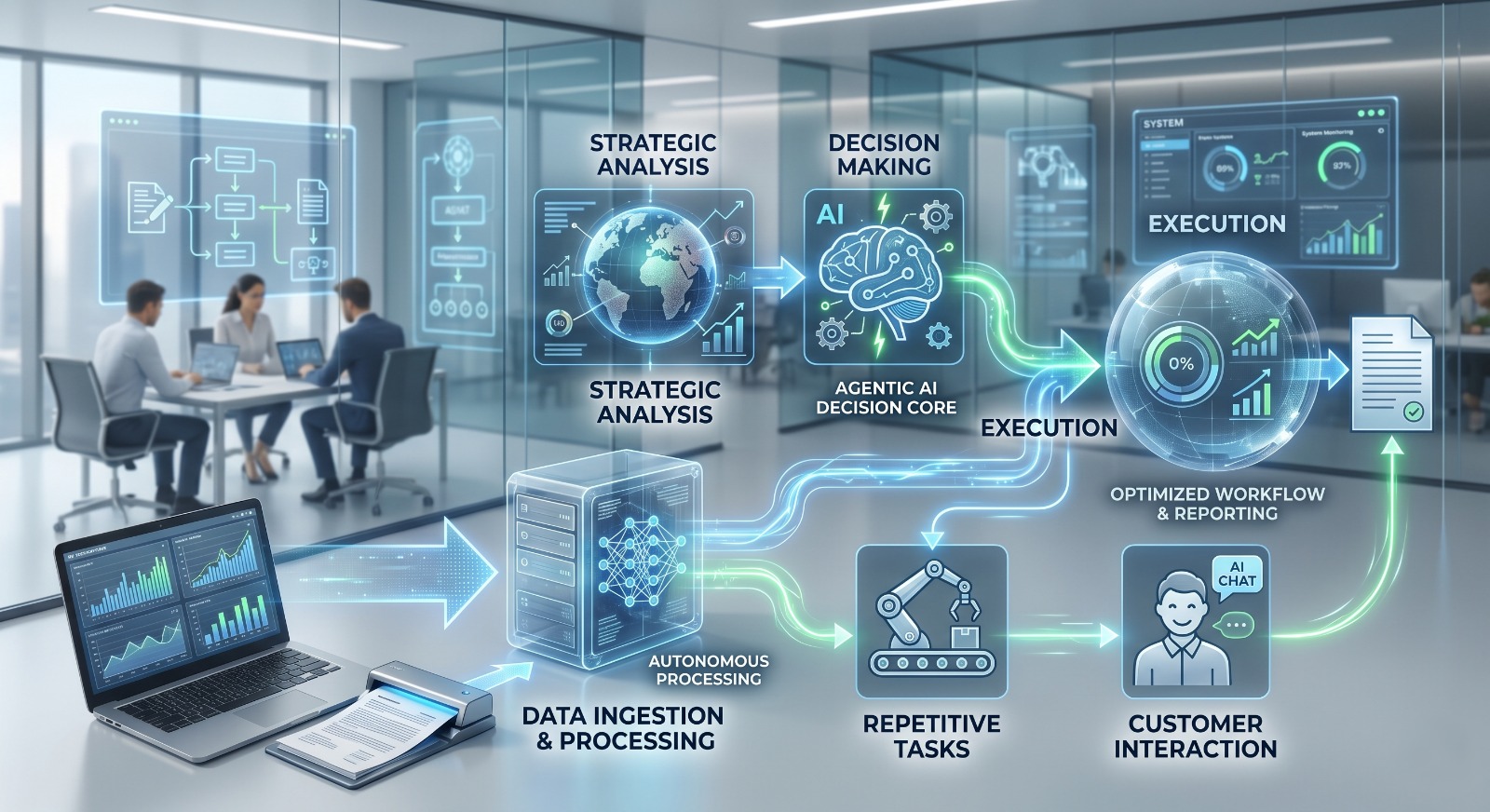
Autonomous Workflows: The Future of AI-Powered Business Automation
One of the most revolutionary concepts in modern Artificial Intelligence is the rise of Autonomous Workflows.
Instead of humans manually managing every step of a process, AI systems can now independently handle complete workflows from start to finish.
This is one of the core technologies powering the new era of Agentic AI.
What Are Autonomous Workflows?
An autonomous workflow is a process where AI systems:
- Understand objectives
- Plan actions
- Execute tasks
- Make decisions
- Adapt to changes
- Complete goals automatically
with minimal or no human intervention.
Unlike traditional automation, autonomous workflows are intelligent and adaptive.
They do not simply follow fixed rules.
They can analyze situations, choose actions, and optimize outcomes dynamically.
Traditional Automation vs Autonomous Workflows
Traditional AutomationAutonomous WorkflowsFixed rulesAdaptive intelligencePredefined stepsDynamic decision-makingLimited flexibilitySelf-adjusting processesHuman supervision requiredHigh autonomyTask-basedGoal-based
Simple Example
Traditional Automation
A system sends the same email to every lead at a fixed time.
Autonomous Workflow
An AI system:
- Finds potential leads
- Researches their business
- Personalizes outreach
- Sends emails
- Monitors responses
- Schedules meetings
- Updates CRM systems
- Follows up automatically
The entire process operates intelligently with minimal human input.
How Autonomous Workflows Work
Modern autonomous workflows combine several AI technologies:
Large Language Models (LLMs)
Used for understanding language, reasoning, and generating responses.
Examples include systems developed by:
AI Agents
AI agents execute specific tasks and interact with tools, software, and databases.
Memory Systems
Allow AI systems to remember previous interactions and maintain long-term context.
Tool Integrations
AI connects with:
- CRMs
- Email systems
- Databases
- Social media platforms
- Analytics dashboards
- Payment gateways