
Government & AI: How Public Institutions Are Adopting Intelligent Systems
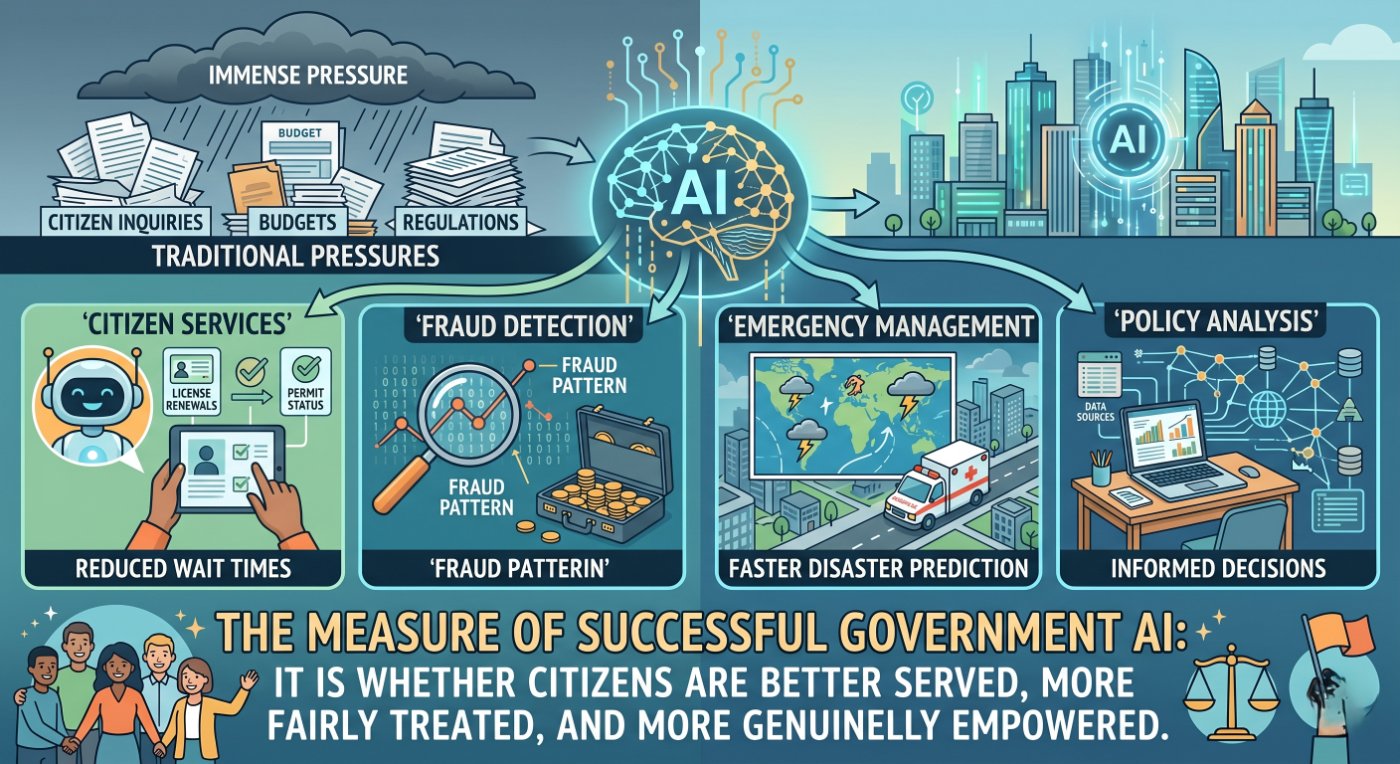
Government institutions around the world are under immense pressure: rising citizen expectations, constrained budgets, complex regulatory environments, and an ever-growing volume of data to manage. Artificial intelligence is emerging as a tool that addresses many of these pressures simultaneously if deployed carefully, with appropriate safeguards and genuine citizen benefit at the center.
Where AI Is Already Being Used in Government
Citizen services AI-powered chatbots handle millions of routine inquiries to government agencies benefit eligibility questions, permit status checks, license renewals reducing wait times and freeing human staff for complex cases. The UK government's HMRC uses AI to handle tax queries. Singapore's Whole-of-Government AI strategy has deployed AI across 16 agencies to improve citizen-facing services.
Fraud detection Revenue authorities and social benefit agencies use AI to identify patterns in data that indicate fraudulent claims or tax evasion catching irregularities at a scale no human audit team could match, while freeing auditors to investigate the flagged cases.
Policy analysis AI tools assist policy researchers in synthesizing enormous volumes of literature, public submissions, and data to inform policy decisions. What previously took teams of researchers months can be compressed into days?
Emergency management AI systems analyze weather data, historical disaster patterns, and infrastructure maps to improve disaster prediction and resource deployment. During floods, fires, and public health emergencies, faster and more accurate information saves lives.
The Critical Challenges
Government AI deployment raises unique challenges that do not exist in the private sector. Accountability when an AI system makes a decision that affects a citizen's benefit, housing, or immigration status, who is responsible for that decision? Bias government AI systems that systematically disadvantage particular communities have profound civil rights implications. Transparency citizens have a right to understand how decisions that affect them are made. Privacy government systems hold uniquely sensitive data, and AI expands the surface area for potential misuse.
"The measure of successful government AI is not efficiency alone. It is whether citizens are better served, more fairly treated, and more genuinely empowered than before the technology arrived.